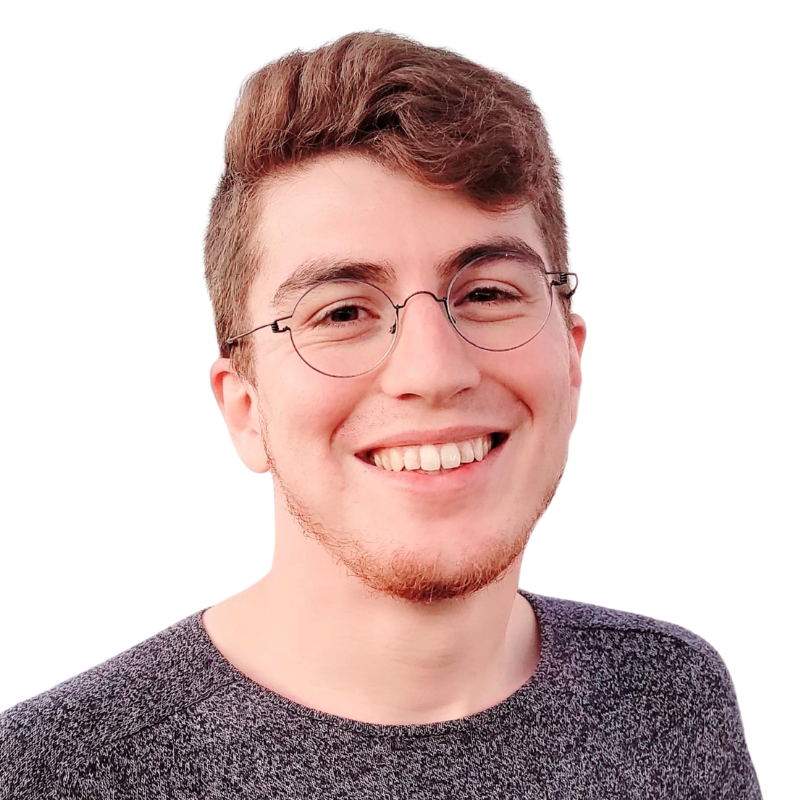
S. Furkan Ozturk was born in Ankara, Turkiye, where he received his early education. His interest in science began early on, inspired by reading biographies of eminent scientists. He enjoyed observing the skies with his telescope and keeping observation notebooks, which laid the groundwork for his future academic pursuits in physics.
Furkan received his undergraduate degree in Physics in 2018 from Bilkent University in Ankara, Turkey, where he graduated as the valedictorian of his class with the highest cumulative GPA ever achieved in the department’s history. For his bachelor’s thesis, he worked on the theory of dipolar quantum droplets—quantum mechanical analogs of magnetic liquid droplets composed of magnetic atoms.
In 2018, Furkan began his Ph.D. studies at Harvard University’s Department of Physics, under the supervision of Prof. Markus Greiner. Initially, his research involved building an erbium quantum gas microscope, an analog quantum computer to study exotic quantum phases of matter. Within the Erbium Lab, he built an ultra-low noise optical lattice, an artificial crystal lattice made out of light, using a custom-built green laser to explore the physics of magnetic quantum gases under a high-resolution objective. This research led to a publication in Nature, marking the first observation of dipolar phases of matter in an optical lattice.
In 2021, Furkan shifted his research focus towards the origins of life and joined the Sasselov Group. Currently, his work centers on investigating the origins of biomolecular homochirality, specifically examining the role of magnetic surfaces as chiral agents due to the chiral-induced spin selectivity (CISS) effect. In his recent work, by utilizing magnetic surfaces as templates for the asymmetric crystallization of an RNA precursor, he demonstrated a robust method for achieving homochirality in RNA under prebiotic conditions. This technique, noted for its efficiency, led to a US patent for chiral separation, highlighting its practical use in pharmacology. In the same year, he published a paper describing the propagation of chiral information from D-nucleic acids to L-peptides and then to homochiral metabolites, which was highlighted as the editor’s selection and featured on the issue’s cover.
Dr. Ozturk’s Ph.D. thesis research on homochirality has been recognized by origin of life chemist and Nobel laureate Jack Szostak as “”a real breakthrough”” and has been featured in prestigious science outlets such as Nature, Science, and Quanta Magazine. He received the Gertrude and Maurice Goldhaber Prize from the Harvard Physics Department, awarded annually to an outstanding graduate student in physics. Additionally, his work has been recognized with the Ataturk Science Award, the Innovation Prize, and first prize in the Ten Outstanding Young Persons of the World competition Turkey 2023 by JCI in the category of Scientific Development. Furthermore, his research on life’s homochirality inspired the popular science documentary “”Cracking Chirality”” by the Dreyfus Foundation. Dr. Ozturk has been invited to speak at numerous scientific conferences, including being one of the 25 speakers at the Solvay Conference in 2024, which is renowned for bringing together the most distinguished scientists to discuss groundbreaking advancements in physics and chemistry.
After completing his Ph.D. in 2024, Dr. Ozturk was awarded the Junior Research Fellowship by King’s College, Cambridge, and the Kavli-Laukien Prize Fellowship by the Origins of Life Initiative at Harvard University. Dr. Ozturk is currently an independent research fellow at Harvard University and King’s College, Cambridge, where he is investigating the origins of life and the physics of living systems.
Dr. Ozturk is also interested in science outreach and public engagement of science. He owns a YouTube channel with over 75,000 subscribers and 2.5 million total views, where he creates educational and scientific content primarily for the Turkish-speaking audience.
S. Furkan Ozturk was born in Ankara, Turkiye, where he received his early education. His interest in science began early on, inspired by reading biographies of eminent scientists. He enjoyed observing the skies with his telescope and keeping observation notebooks, which laid the groundwork for his future academic pursuits in physics.
Furkan received his undergraduate degree in Physics in 2018 from Bilkent University in Ankara, Turkey, where he graduated as the valedictorian of his class with the highest cumulative GPA ever achieved in the department’s history. For his bachelor’s thesis, he worked on the theory of dipolar quantum droplets—quantum mechanical analogs of magnetic liquid droplets composed of magnetic atoms.
In 2018, Furkan began his Ph.D. studies at Harvard University’s Department of Physics, under the supervision of Prof. Markus Greiner. Initially, his research involved building an erbium quantum gas microscope, an analog quantum computer to study exotic quantum phases of matter. Within the Erbium Lab, he built an ultra-low noise optical lattice, an artificial crystal lattice made out of light, using a custom-built green laser to explore the physics of magnetic quantum gases under a high-resolution objective. This research led to a publication in Nature, marking the first observation of dipolar phases of matter in an optical lattice.
In 2021, Furkan shifted his research focus towards the origins of life and joined the Sasselov Group. Currently, his work centers on investigating the origins of biomolecular homochirality, specifically examining the role of magnetic surfaces as chiral agents due to the chiral-induced spin selectivity (CISS) effect. In his recent work, by utilizing magnetic surfaces as templates for the asymmetric crystallization of an RNA precursor, he demonstrated a robust method for achieving homochirality in RNA under prebiotic conditions. This technique, noted for its efficiency, led to a US patent for chiral separation, highlighting its practical use in pharmacology. In the same year, he published a paper describing the propagation of chiral information from D-nucleic acids to L-peptides and then to homochiral metabolites, which was highlighted as the editor’s selection and featured on the issue’s cover.
Dr. Ozturk’s Ph.D. thesis research on homochirality has been recognized by origin of life chemist and Nobel laureate Jack Szostak as “”a real breakthrough”” and has been featured in prestigious science outlets such as Nature, Science, and Quanta Magazine. He received the Gertrude and Maurice Goldhaber Prize from the Harvard Physics Department, awarded annually to an outstanding graduate student in physics. Additionally, his work has been recognized with the Ataturk Science Award, the Innovation Prize, and first prize in the Ten Outstanding Young Persons of the World competition Turkey 2023 by JCI in the category of Scientific Development. Furthermore, his research on life’s homochirality inspired the popular science documentary “”Cracking Chirality”” by the Dreyfus Foundation. Dr. Ozturk has been invited to speak at numerous scientific conferences, including being one of the 25 speakers at the Solvay Conference in 2024, which is renowned for bringing together the most distinguished scientists to discuss groundbreaking advancements in physics and chemistry.
After completing his Ph.D. in 2024, Dr. Ozturk was awarded the Junior Research Fellowship by King’s College, Cambridge, and the Kavli-Laukien Prize Fellowship by the Origins of Life Initiative at Harvard University. Dr. Ozturk is currently an independent research fellow at Harvard University and King’s College, Cambridge, where he is investigating the origins of life and the physics of living systems.
Dr. Ozturk is also interested in science outreach and public engagement of science. He owns a YouTube channel with over 75,000 subscribers and 2.5 million total views, where he creates educational and scientific content primarily for the Turkish-speaking audience.